Framework · working draft
A blueprint of belonging
A buildable plan for how a predominantly white private school welcomes, supports, scaffolds, and retains the students it has historically placed outside the bubble of normalcy — BIPOC students, neurodivergent students, students marginalized for gender identity, and everyone living at the crossings.
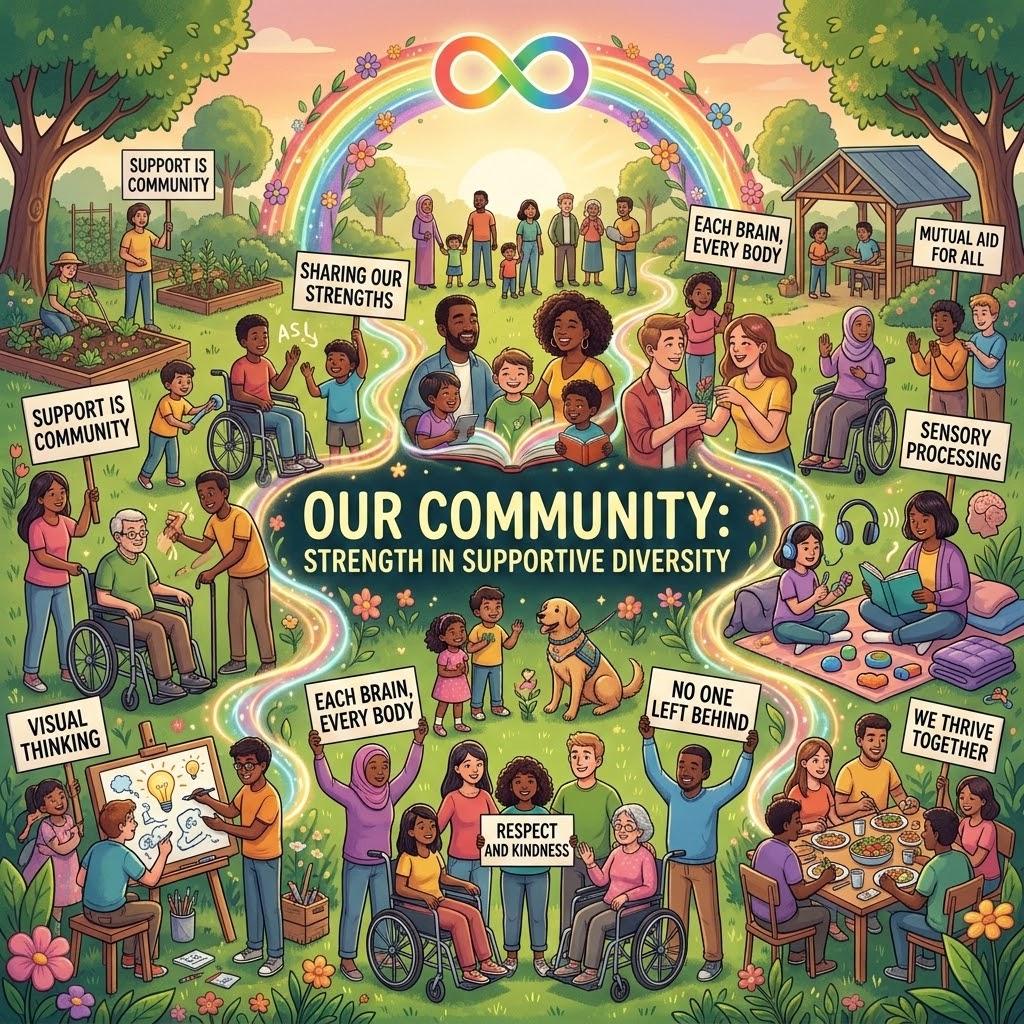
The phrase is used with attribution: Morgane Michael published A Blueprint for Belonging: Building a Positive School Culture From the Ground Up (Solution Tree, 2024), and variations appear across the literature. What is mine here is the construct — study-derived, school-specific, and checkable against the actual building. A blueprint is not a mission statement; it is a drawing with measurements.
This page is a working draft — the constructive half of the dissertation, assembled before the study's evidence is gathered. The counterstories and growth data the study collects will revise these walls. That is the point of a blueprint: it is meant to be marked up.
I
Welcome
Arrival. Whether a student is met as a member of the school from the first morning — not as a guest who might earn membership later.
Welcome is decided before anyone teaches anything. It lives in the admissions materials a family sees, the name read correctly on the first day, the letter that assumes the family belongs rather than auditioning them, and the older students who model what the community actually is. Belonging is never earned; the community brings it. Welcome is where that sentence either becomes practice or stays a poster.
Indicators — what you would see if the wall holds
- New students' names are pronounced correctly on the first read-through — because an adult practiced, not because a student corrected them in front of the room.
- The first family communication assumes membership: 'here is how we do things together,' not 'here is what we expect of you.'
- New students are paired with trained older students who understand their role as models of belonging, not just tour guides.
- Admissions and marketing materials show the school as it actually is and as it honestly intends to become — not a diversity tableau assembled for the viewbook.
- First-week belonging is checked deliberately: every new student is known by name and story by at least two adults within the first month.
- Welcome events are not the only welcome — the ordinary Tuesday morning carries the same message as the orientation program.
Checklist — for a school that is rapidly diversifying
- Audit every first-touch artifact — website, viewbook, acceptance letter, family packet — for whether it assumes membership or describes a gate.
- Build a name-practice routine for every adult who will read a roster aloud, before the first day.
- Train and charge older students as belonging models, with the same seriousness given to any other student leadership role.
- Assign every new student at least two named adults responsible for knowing them within the first month.
- Ask new families, in their first semester, one direct question: did anything in your first weeks make you feel like a guest?
II
Support
What happens when a student struggles. Whether help arrives as a normal part of the school or as a marked, stigmatized track.
Every school says it supports its students. The blueprint asks a harder question: who is seen as needing support, who is seen as deserving it, and whether those two lists are the same. Support that arrives with stigma — the separate room, the whispered referral, the assumption about which families can navigate the system — is not support; it is sorting with kinder language. In a rapidly diversifying school, the support system is often where old assumptions about the old student body quietly persist.
Indicators — what you would see if the wall holds
- Use of support services is tracked by demographic — and the patterns are examined, not just collected. Who is referred, who self-refers, and who never appears at all.
- Help is advertised to everyone as a normal part of the school's work, not routed through a door some students are embarrassed to be seen at.
- There are multiple entry points to support — teacher, advisor, counselor, self — so that no single adult's assumption is the gate.
- Counseling, learning support, and the front office include people who share identities with the students being served — representation at all levels, not only in the classroom.
- Discipline referrals and support referrals are read side by side: a student sent to one door instead of the other is a data point about adult interpretation, not about the student.
- Adults can name the difference between a micro-assumption and an observation, and there is a practice — a decision log, a colleague check — for catching the first before it becomes the second.
Checklist — for a school that is rapidly diversifying
- Map every route a student can take to help, and count how many of those routes pass through a single adult's judgment.
- Disaggregate support usage and referral data by race, neurotype, and identity — then ask who is missing from the picture entirely.
- Make support visible and ordinary: named in syllabi, normalized in advisory, never whispered.
- Review discipline and support referrals together at least once a term, looking for students sent to the wrong door.
- Hire and retain support staff who reflect the student body the school is becoming, not only the one it has been.
III
Scaffold
The teaching itself. Whether the structure that helps a student do hard work is built into the room or bolted on as an exception.
Scaffold is where belonging meets achievement. A scaffold is not a lowered standard — it is the temporary structure that lets a student reach the real one. The question the blueprint asks is whether that structure is architecture or accommodation: built into the room for everyone who needs it, or granted case by case, unevenly, by adults whose grace follows their assumptions. This is the wall where racialized rigor does its damage — where the same stumble earns one student a scaffold and another a verdict.
Indicators — what you would see if the wall holds
- Syllabi and units are designed with structure built in — clear rubrics, modeled examples, chunked deadlines, multiple ways to show learning — rather than retrofitted after students fail.
- Grace decisions (extensions, retakes, late work) are logged and auditable, so a teacher can see their own pattern before a pattern becomes a verdict about a child.
- Growth data — MAP or its equivalent — is disaggregated and read honestly: not to rank students, but to ask whether the school's structure is working equally for every group it serves.
- Rigor is defined by the work, not by the harshness of the demand — and adults can say what college preparation actually requires, as opposed to what difficulty theater looks like.
- Neurodivergent students find the structure they need in the ordinary classroom, not only in a separate plan — the room itself is designed for variability.
- Teachers model the work they assign: they write the paragraph, sit the practice, and show their own imperfect drafts — so struggle is normalized as part of learning, not evidence against a student.
Checklist — for a school that is rapidly diversifying
- Audit one unit per department for built-in structure: rubric, model, checkpoints, multiple demonstrations of learning.
- Start a personal decision log for grace decisions — extensions, retakes, exceptions — and review it monthly for pattern.
- Disaggregate growth data by subgroup and pair every number with at least one student account, so the data never floats free of the children.
- Run a racialized rigor audit: pick a common infraction or stumble and ask, honestly, whether the response differs by who the student is.
- Invest in teacher learning on neurodiversity and learner variability as core professional development, not an elective.
IV
Retain
The wall schools like mine rarely examine. Whether the students we welcomed are still here, still thriving, three years later — and who quietly left.
A school can welcome beautifully, support adequately, scaffold well — and still lose the very students it claims to serve, one quiet withdrawal at a time. Retention is the honest wall, because it measures the other three. Every departure is a question the school has to be willing to ask: did the building fail this student, and where? A blueprint that cannot be inspected against the building is just a wish, and retention is where the inspection happens.
Indicators — what you would see if the wall holds
- Attrition is tracked by demographic and read aloud in leadership meetings — who leaves, when, and what the school knows about why.
- Every departure of a BIPOC, neurodivergent, or otherwise marginalized student includes a genuine exit conversation, conducted by someone trained to hear hard answers.
- Belonging is measured on a schedule — climate surveys, student accounts, focus conversations — not assumed from the absence of complaints.
- Retention of BIPOC and marginalized faculty and staff is tracked with the same seriousness as student retention, because students read the adult body of the school as evidence about their own futures.
- Alumni who left — and alumni who stayed — are asked what the school felt like from the inside, and their answers inform the next draft of the blueprint.
- The school can say, with numbers and stories both, whether the students it welcomed are thriving — not merely enrolled.
Checklist — for a school that is rapidly diversifying
- Build an attrition report by demographic, reviewed by leadership at least annually, with named follow-up questions.
- Institute exit conversations for departing students and families, conducted by someone other than the admissions office.
- Run a belonging climate measure on a fixed schedule and publish aggregate trends honestly, protecting small groups from identification.
- Track faculty and staff retention by demographic alongside student retention, and treat the two as one picture.
- Create an alumni belonging inquiry — a short, honest instrument for graduates and for families who left — and let the answers revise the blueprint.
A blueprint drawn from one school's students is a plan for that school's site, not a universal design. What transfers is the method of drawing it — the questions, the indicators, the willingness to inspect the building honestly — not the drawing itself.