Who gets called gifted, and who gets pulled out
How do we take all of these layers and move toward more equity for neurodiverse students in schools? Start with who gets identified — and who gets sent to me.
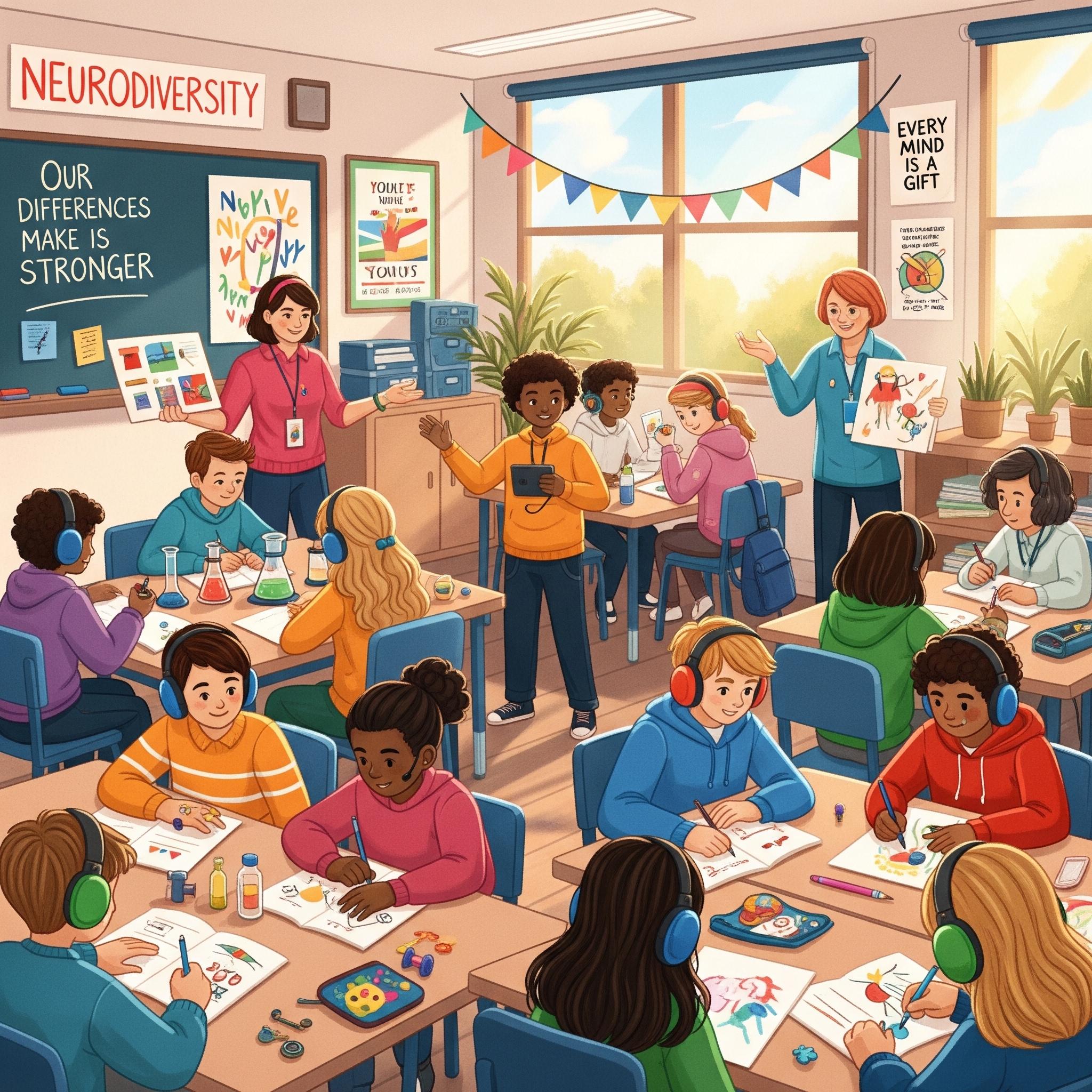
How do we take this wealth of information and all of these layers and move toward more equity for neurodiverse students in educational settings? How do we move beyond the Global North paradigm to fully embrace the whole child, the whole human, as unique and beautiful and valued exactly as they are, without needing curing or fixing?
Krystal Cohen, a researcher at Princeton, wrote "Young, Gifted, and Black: Inequitable Outcomes of Gifted and Talented Programs." Race and maternal education were factors in whether Black and Latinx students were identified as eligible for gifted programs (McBee 2010; McClain and Pfeiffer 2012; Wagner, Dymes, and Wiggan 2017).
As a public and private school teacher, I have seen an evolution in the acceptance of neurological differences over the past twenty-five years. I used to teach pull-out classes for students whose life experiences met at the intersection of race, first language, socioeconomic level, parent education level, gender identity, and neurological differences — to name a few of the lanes or crossroads they lived within.
Add to that their grades, testing scores, reading level, writing level, lexile scores, attitudes in classes, motivation to learn within the class structure they found themselves in, their relationship with the teacher in power, and teacher judgment of their behavior — which was always a factor in placing them with me.
Two identification systems, running in the same building, both requiring adult judgment. One sorts children upward and one sorts them sideways to my room. This is where my racialized rigor question and my neurodiversity question meet.