Shift sideways: intersectionality was running underneath the whole time
The history of neurodiversity is not one line. There is a parallel pathway bubbling up underneath it — intersectionality — and I cannot tell the first story honestly without it.
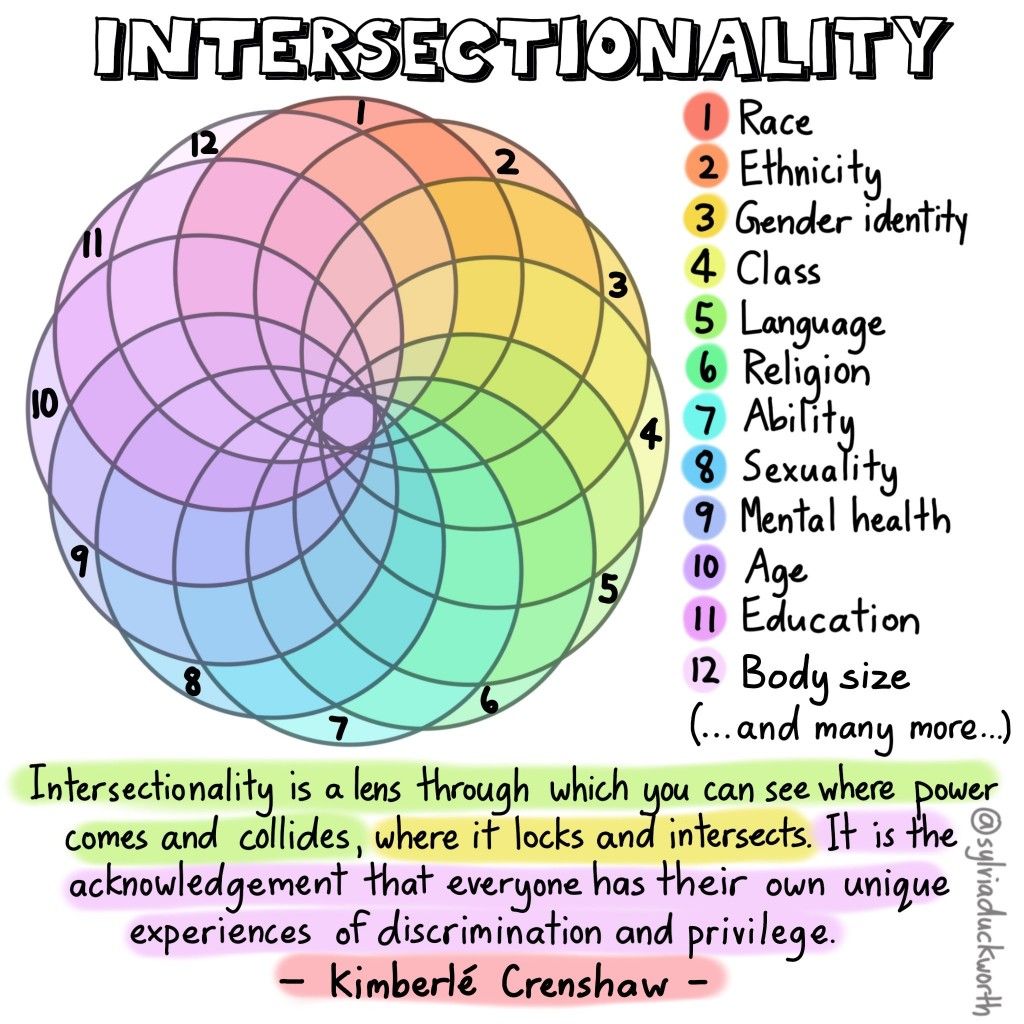
I keep saying "shift sideways" in the presentation because this is all happening at once. There is a parallel pathway of conversation underneath the explanations, bubbling up through them, and that is the concept of intersectionality and its effect on the marginalization of people who are systematically kept outside of empowerment by the dominant power culture — which is still largely white and male.
The groundbreaking work of Dr. Kimberlé Crenshaw created the language and the visual representation that help us understand the lived experience of marginalized people as they struggle to exist within systems that discriminate and oppress on multiple levels and through multiple intersection points. Looking at the diagram, a person can find multiple overlapping points of discrimination happening at once — not in sequence, not one at a time.
And I have to say the harder part out loud too: I fully recognize that I take part in that dominant white culture whether I know it or not, just by my position within it. That sentence is uncomfortable to write and I am leaving it in.
Once intersectionality is on the table, the neurodiversity timeline stops being a medical history and becomes a story about power — who gets studied, who gets believed, who gets to be a whole person and who becomes a case.